

Introduction
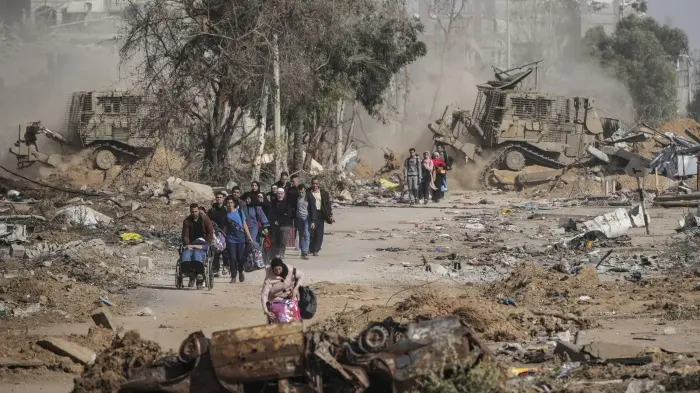
A new political twist is unfolding in the Middle East. France has announced that it will recognize Palestine as an independent state, a move that will be formalized at a session of the United Nations General Assembly. This decision, on the one hand, gives a symbolic boost to the Palestinian Statehood movement, while news of civilian deaths from Israeli airstrikes in Gaza further aggravates the situation. The Hamas-run health ministry has confirmed that 61 people have died and more than 220 have been injured in just 24 hours. These developments have simultaneously placed both international diplomacy and the humanitarian crisis in the spotlight.
France’s Historic Decision
French President Emmanuel Macron has declared that the time has come to recognize Palestine as a state. Macron said:
“Hamas’s aim is not to create a Palestinian state, but to prolong the conflict. If we want peace, if we want to isolate Hamas, then recognition is a precondition.”
This statement clearly shows that France wants to sideline Hamas and support the Palestinian Authority. The French Foreign Minister also said that this is a “symbolic, immediate, political decision” that highlights France’s commitment to a two-state solution.
The timing of France’s decision is also significant – world leaders are meeting at the United Nations General Assembly, and the Palestinian issue has renewed global attention. It’s a diplomatic gamble that could revive the Middle East peace process, or create further division.
Bloodshed in Gaza – 61 Civilians Killed
Heartbreaking news emerged from Gaza at the same time France announced its decision. The Hamas-run Health Ministry reported that 61 people were killed and 220 injured in Israeli strikes. The strikes were so intense that rescue teams are still finding bodies under the rubble.
Two major hospitals – Al-Rantissi Children’s Hospital and Eye Hospital – have now ceased operations due to damage or attacks near them. This has pushed Gaza’s healthcare system further towards collapse. Doctors have reported a severe shortage of medicines, ICU beds, and ventilators.
Eyewitnesses say the only sound is bombing. One Gazan resident said:
“The future seems to be over, there is only fear and darkness in every home. No one knows what will happen tomorrow.”
International Reactions – Mixed Responses
World reactions to France’s decision are divided.Supportive Camp: Countries like the UK, Canada, Australia, and Portugal have already recognized Palestine, and France’s decision is coordinated with them. They say this is a necessary step that will pressure Israel and give Palestinians political legitimacy. Critical Camp: Israel strongly opposes this. Israeli leaders say this move will “reward” Hamas’s terrorism and make negotiations more difficult. The US is also cautious, saying that unilateral recognition could further destabilize the peace process.
Palestinian Voices: Many in the West Bank said that recognition is a welcome move, but if ceasefire, aid, and reconstruction steps are not taken, the ground reality will not change.
Implications – What Will Change?
Diplomatic Pressure on Israel
This move by France and other Western allies will further increase international pressure on Israel to focus on a ceasefire and humanitarian access.
Two-State Solution Revival
This recognition is a symbolic signal that the two-state solution is still viable. If the international community unites, negotiations can be resumed.
Humanitarian Crisis Spotlight
The closure of Gaza hospitals and the deaths of civilians are putting pressure on global aid agencies and NGOs to take immediate action.
Risk of Conflict Escalation
Israel’s response could be aggressive. Hamas and other armed groups could also change their stance, making the situation more volatile.
Conclusion
France’s recognition of Palestine as a state is a symbolic and politically powerful step that is injecting new energy into Middle East politics. But on the ground, Gaza’s strikes, civilian deaths, and hospital collapses have shown that recognition alone will not bring peace and stability. Until the violence stops and humanitarian access improves, there will be no substantial improvement in the lives of ordinary Palestinians.
These two developments simultaneously remind us that the Middle East crisis is a solution only to diplomacy.